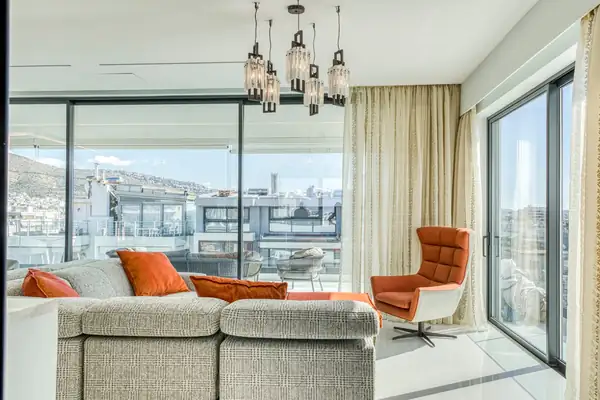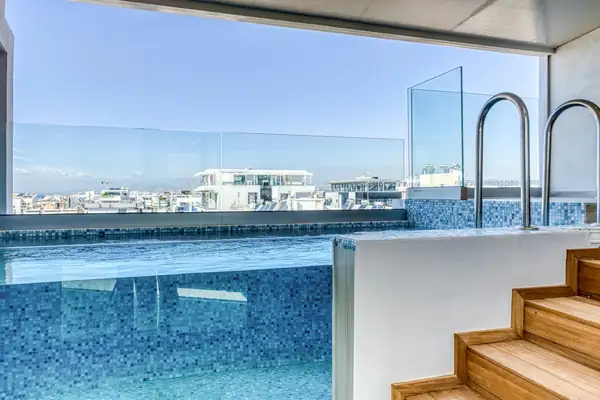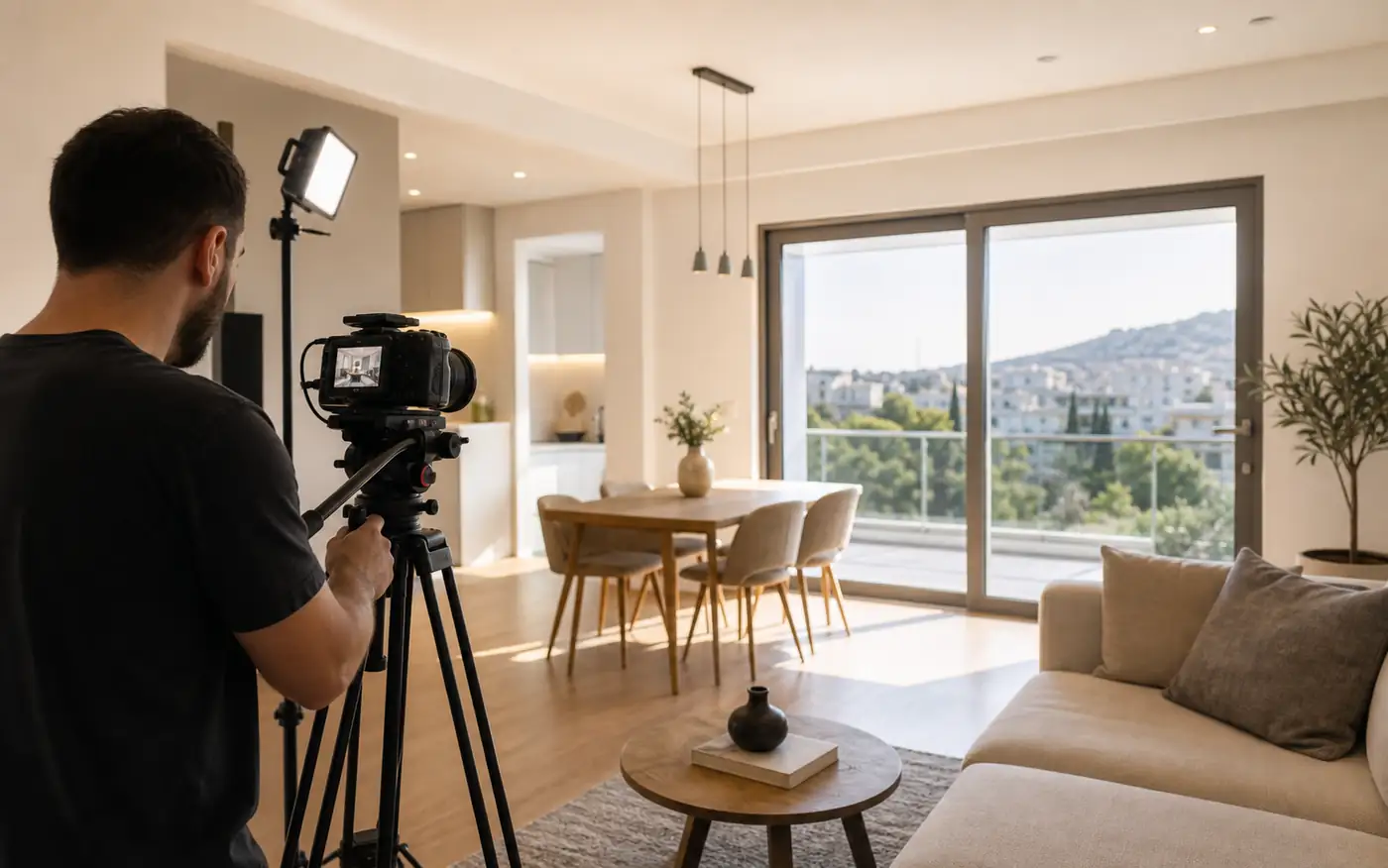
Good property photography shows the space as bright, with straight lines and in a logical order, without making it look bigger or different from what it is. The aim is for anyone interested to understand from the listing what they will find when they come to view the property.
The photos are the first viewing. From them, the buyer or tenant decides whether to call, and against them they compare whatever they see later in person. That is why a shoot is judged on two points: whether it shows the space clearly and whether the actual viewing confirms the picture.
Light: the right time and open windows
Natural light makes the biggest difference. The time of the shoot is set according to the orientation: an east-facing living room is lit one way in the morning and another way in the afternoon. Before the shots, all the shutters, blinds and curtains are opened and the lights in the home are switched on, so that no corners are left dark.
The challenge is the difference in brightness between the room and the window. If the exposure is set for the interior, the view “burns out” and becomes a white surface. That is why HDR is used: successive shots are taken at different exposures and combined, so that both the room and whatever is outside are visible. Good HDR editing means natural colours, not grey walls and a sky that looks painted.
If the bulbs in the home have different light colours, some cool and some warm, the room comes out with coloured shadows. A simple check before the shoot saves a good deal of correction work.
Straight verticals and a lens that does not mislead
Vertical lines, meaning the corners of walls, door frames and cupboards, should come out vertical. When the camera tilts up or down, the walls seem to lean and the space looks crooked. The solution is a tripod, a level camera at roughly chest height and perspective correction where needed.
A wide-angle lens is essential in small rooms, because without it the space does not fit in the frame. But it has its limits. A very wide angle stretches the edges of the image, lengthens the floor and makes a room look much bigger. Prospective buyers or tenants notice as soon as they walk in, and their first impression turns into distrust.
A practical rule: every photo shows the space from a spot where a person could stand, with proportions they will recognise when they stand there.
The order of photos in the listing
A listing is read like a tour. If the photos go from the bathroom to the balcony and then to the kitchen, the viewer cannot work out how the rooms connect. An order that works for most homes:
- The lead photo: the space that stands out, usually the living room, the view or the façade.
- Living and dining room, from two angles, to show how they connect.
- Kitchen, in full and with its appliances.
- Bedrooms, from the main one to the smaller ones.
- Bathrooms and WCs.
- Balconies, terraces, garden and view.
- Façade, entrance, communal areas and parking space, if there is one.
- Details that matter for the decision.
If the listing also has a floor plan, the order of the photos should ideally follow it. That way the reader “walks” through the home in the order they would walk through it in person.
Outdoor spaces, details and honesty
The façade and the entrance show the building and the street, something prospective buyers or tenants want to know before they book a viewing. Balconies and gardens are also photographed from the inside looking out, to show how they relate to the rooms. Details have their place when they answer a question: the flooring material, a fireplace, the wardrobes, the air conditioning. A close-up of a vase of flowers says nothing about the home.
Editing corrects colour, exposure and lines. It does not remove permanent features. These are best avoided:
- “Erasing” columns, pipes, aerials or the building opposite.
- Adding a view that cannot be seen from that particular window.
- Using the framing to hide wear and tear that buyers or tenants will see at the first viewing.
- Changing the colour of the walls or the floor.
A property that appears in the photos as it really is brings viewings from people who know what they are going to see. Fewer pointless viewings mean less wasted time for you, for the estate agent and for the prospective buyer or tenant.
How we work at Akinita Media
At Akinita Media, the property media service of THPAUL, every shoot starts with a shot list for the specific property. We note its type, its rooms, the requirements of the listing and the time of day when the light is right. Editing includes HDR correction, and we deliver selected photos in sizes suitable for listings and presentations, with standard delivery within 3 working days.
We cover the whole of Attica. According to the price list on akinitamedia.gr, property photography starts indicatively from €129 + VAT, and the final price depends on the area, the size in square metres and the services you choose. Before the appointment, the room-by-room preparation checklist helps you get the space ready.
Frequently asked questions
How many photos does a property listing need?+
There is no single right number. Every main room should appear at least once, and the most important ones, such as the living room and the kitchen, from two angles. A few good photos in the right order help more than many that repeat the same room. Also check how many photos the platform where the listing will go up accepts.
Does a wide-angle lens make a home look bigger?+
It can, if the angle is too wide. A wide-angle lens is needed to fit a small room into the frame, but when overdone it stretches the edges and distorts the proportions. A good property photo shows the space as someone standing in the same spot would see it.
How do I choose a property photographer in Athens?+
Look at their portfolio: whether the verticals are straight, whether the colours are natural and whether both the room and the view from the window are visible. Ask what the price includes, how much editing is done and how many days delivery takes. You will find the Akinita Media portfolio, organised by property type, at akinitamedia.gr.
How much does property photography cost?+
It depends on the area, the size in square metres, the type of property and the services, such as video or drone. At Akinita Media by THPAUL, property photography starts indicatively from €129 + VAT, according to the price list on akinitamedia.gr. There you will also find an instant price estimate for your own property.