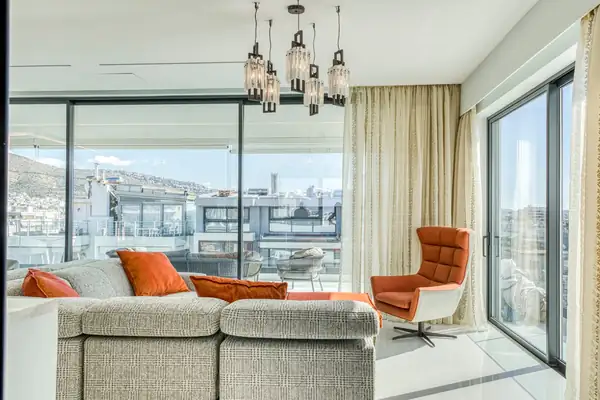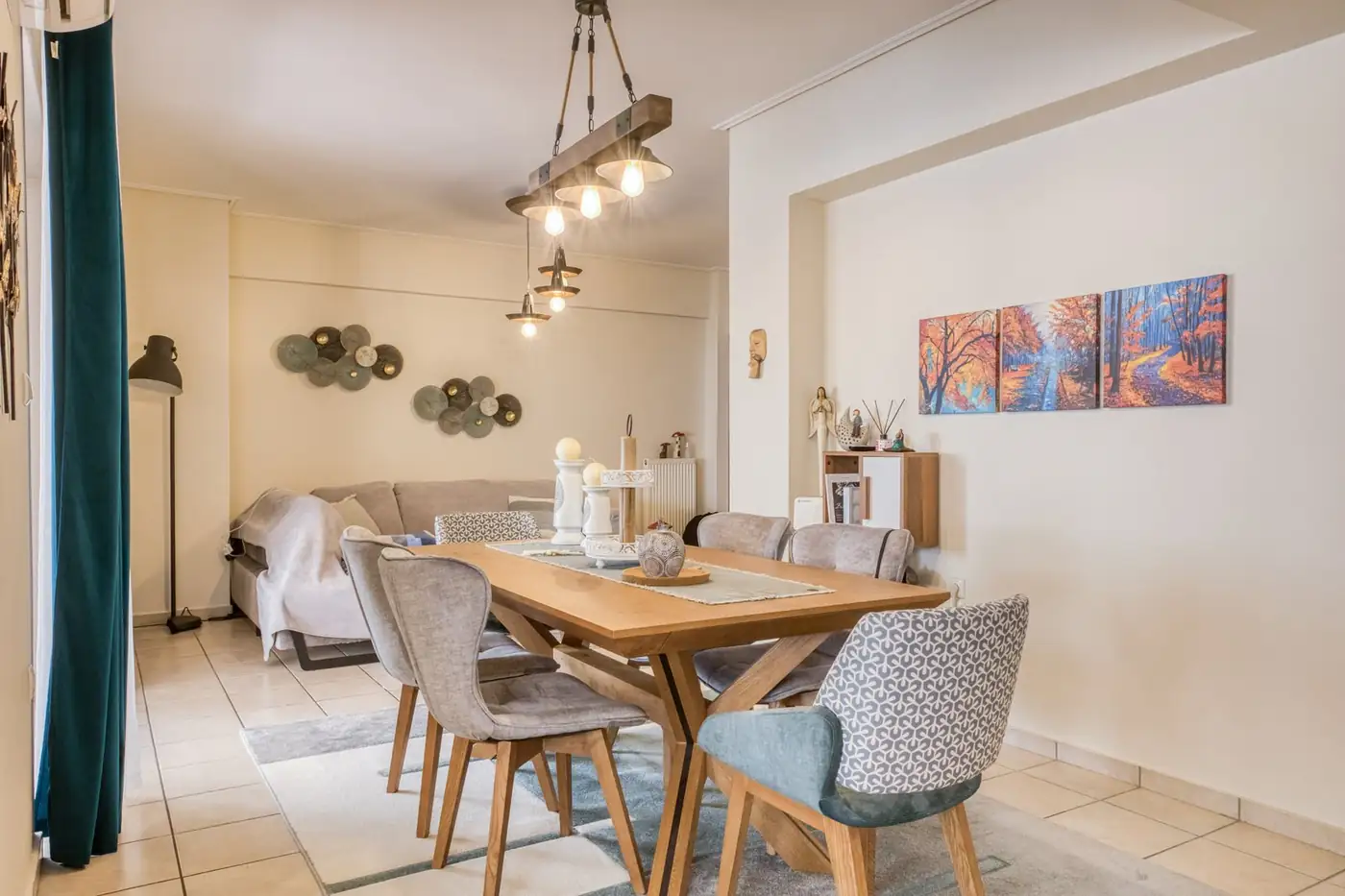
Preparing your home for a photo shoot is mostly about taking things away: fewer objects, more light, clear surfaces. Start two or three days before with the room-by-room checklist below, and keep the last hour for the small things, such as the beds, the towels and the lights.
This work is often called home staging: tidying and arranging a home so that it presents better to the people who see it. A photo shoot rarely calls for new furniture. It calls for order, cleanliness and a little thought about what the lens sees.
Home staging does not hide defects. It removes distractions, so the space itself can be seen. Whatever a prospective buyer or tenant will see at the viewing (a crack, an old kitchen, a small bathroom) does not disappear with clever framing.
Two or three days before: the basics
- Put away personal items: family photos, documents, post, medicines, and drawings and magnets on the fridge.
- Clear the surfaces: worktops, tables, bedside tables, shelves. Anything you do not need goes into a box, and the box goes into a wardrobe or the car.
- Check every bulb. Replace any that have blown and, if possible, keep the same colour of light in each room.
- Do the small repairs: a loose handle, a light fitting without a shade, a cable running across the middle of a wall.
- Clean windows, mirrors, taps and glass surfaces. The lens picks up fingerprints and limescale.
- Arrange where pets and everyone who lives in the home will be during the shoot.
- Tell the photographer anything that matters: a room that will not be photographed, a view you want to show, the time of day when the living room has the best light.
If the home is lived in, do not try to do everything in one afternoon. Go room by room and keep each finished room closed, so it does not fill up again before the shoot.
If a tenant lives in the home, let them know early, explain what will be photographed and agree the time together. Preparation is easier when they know in advance what is needed, and their personal belongings do not appear in any photo.
Living room, dining room and kitchen
The main living areas usually open the listing, so they deserve the most time.
- Cushions neatly arranged, throws folded or put away.
- Remote controls, chargers, magazines and toys out of frame.
- Coffee table almost empty: one book or one vase is enough.
- Dining chairs lined up, table clean and clear.
- Kitchen worktops clear, with one or two exceptions, such as the coffee maker.
- No sponges, washing-up liquid, dish racks or cloths in plain view.
- Sink empty and dry, bins in a cupboard or out of the room.
- Fridge door clear of notes, magnets and calendars.
- Glass-fronted cabinets tidy on the inside too.
Bedrooms and bathrooms
In bedrooms, the lens looks at the bed first. In bathrooms, every small object shows, because the space is small and bright.
- Beds made with clean, ironed sheets, preferably in simple, light colours.
- Pillows in place and a throw if you like, without overdoing it.
- Bedside tables with a lamp and one book at most.
- Curtains open and straight, blinds at the same height on every window.
- Wardrobes closed, with nothing visible on top of them or under the bed.
- Children's rooms with the toys gathered into boxes.
- In the bathroom, toilet lid down.
- Toothbrushes, razors, shampoo and cosmetics in a cabinet.
- Clean towels in the same colour, folded or hung straight.
- Shower and mirror clean and dry, bath mat and laundry basket out of frame.
Outdoor areas and entrance
The façade and balconies are the first view of the home from outside, and in drone shots they show even more.
- Balconies and terraces swept, furniture clean, cushions in place.
- Clothes airers, laundry, brooms and buckets out of frame.
- Plants watered, dry leaves and withered pots cleared away.
- Garden hoses coiled, tools in the storeroom.
- Bins out of sight.
- Roof terrace clear of forgotten furniture and materials, if it will be photographed or if there will be drone shots.
- Pool clean, if there is one.
- Entrance, front door and letterbox clean, garage door closed, cars away from the front of the house.
In the last hour before the photographer arrives
- Open the curtains, roller shutters and shutters throughout the home.
- Turn on all the lights, including table lamps.
- Switch off the TV, screens and ceiling fans.
- Straighten beds, cushions and towels once more.
- Do a final walk-through with your phone: photograph each room and look at the picture. Whatever catches your eye there will also catch the eye of anyone who sees the listing.
Anything you did not get to, tell the photographer as soon as they arrive. It is better for them to know that a room is not ready than to discover it in the middle of the shoot.
During the shoot, stay nearby for access and questions, but out of frame. At Akinita Media we note the rooms and the listing requirements in advance, and book the appointment for the time when the light is right for your home. If it is a short-term rental, also see the shot list for Airbnb and Booking.
Frequently asked questions
What is home staging?+
Home staging is tidying and arranging a home so that it presents better in photos and viewings. For a photo shoot, it is usually enough to remove personal items, clear the surfaces and clean. You do not need to buy furniture, and you should not hide defects that people viewing the property will see up close.
How far in advance should you start preparing your home for a photo shoot?+
Two or three days before the shoot is usually enough for tidying, small repairs and cleaning. Keep the small things for the last hour: beds, towels, curtains and lights. If the home is lived in, split the work by room, so that everything is not left for the last day.
Does the home need to be empty of furniture for the photo shoot?+
No. Furniture helps viewers understand the size and purpose of each room. What needs to go is anything surplus: personal items, cluttered surfaces, cables. If the home is already empty, cleanliness and light become even more important.
Do I need to be at home during the photo shoot?+
It helps if someone is there for access and questions, for example where the light switches are or which doors open. During the shots, they stay out of frame, in a room that has already been photographed. Pets are best kept in another room or out of the house.